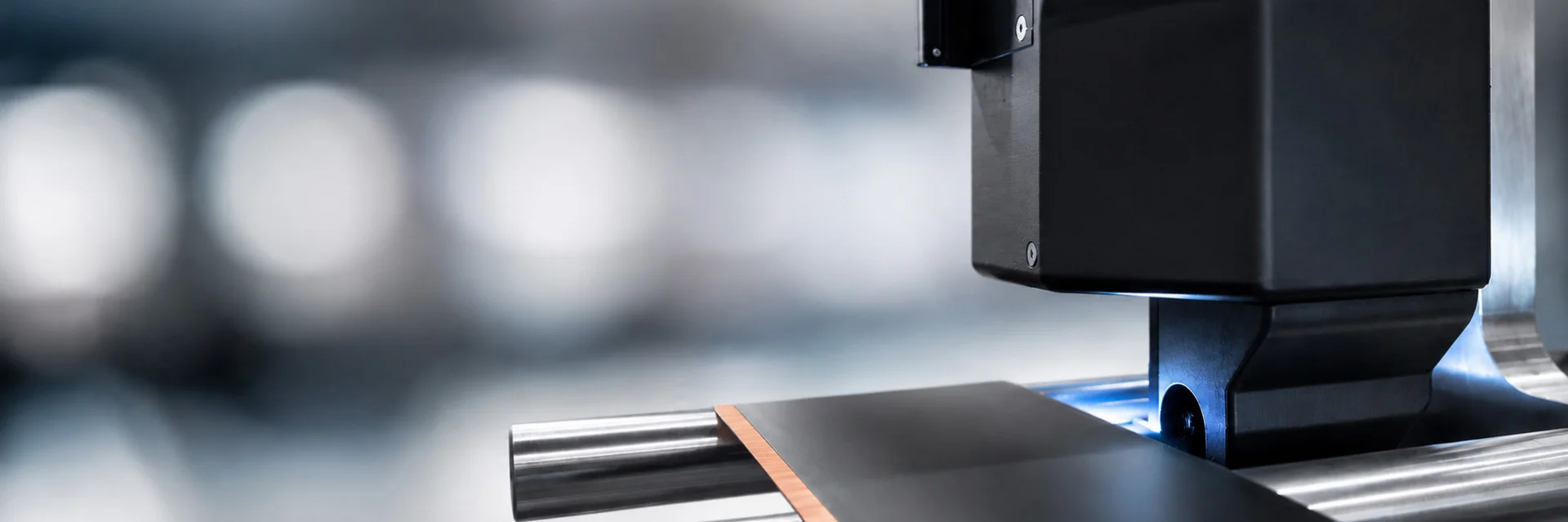
CLEAREdge™ – Perfect edge quality for safe and high-performance batteries
Microscopic edge inspection for safe, high-performance, and reproducible battery cells.
During the mechanical cutting of electrode materials, microscopic defects such as burrs, wavy edges, delaminations, cracks, or fraying often form along the cut edges. These defects are barely visible to the human eye but can have significant impacts on the performance, lifespan, and safety of lithium-ion battery cells including internal short circuits and safety-critical events.
CLEAREdge™ combines high-resolution top- and side-view microscopy in an industrialized sensor system.
The combination of both perspectives enables complete inline analysis of the true edge structure for the first time - even at high line speeds.
- Top View: Detection of horizontal burrs, fraying, precise edge position as the basis for a real-time autofocus function for the side view.
- Side View: Reliable detection of vertical burrs, wavy edges, delaminations, cracks, and frying of edges.
Features
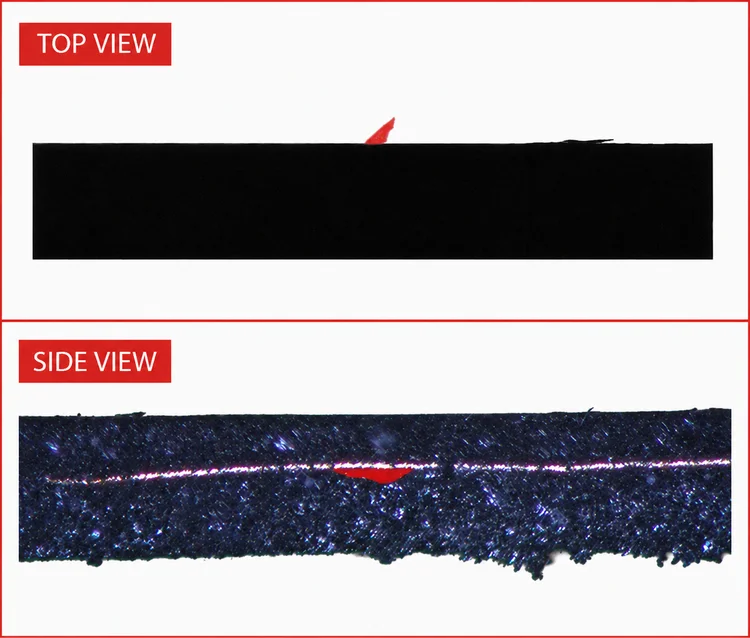
- Orthogonal edge-inspection detecting vertical and horizontal burrs and other edge irregularities
- Immediate process Feedback through Live-Viewing
- Burr detection starting at 7 µm
- 100% inline edge-inspection up to 90 m/min
- AI-powered analysis and classification of relevant edge deviations
- Complete traceability with position-accurate assignment of quality data (SMARTData)
- Manufacturer-independent and retrofit-ready
- Standalone or integrated module for BST SLITTINGControl®
* Product is expected to be available for quotations and project starts no earlier than late 2026, with a phased feature roll-out aligned to market requirements and prioritization.
Common edge defects when cutting electrodes
Burrs
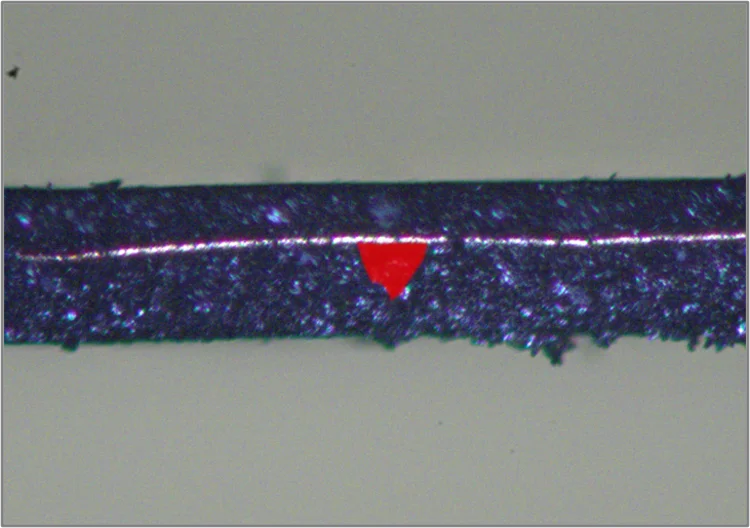
- Description:
- Standing material protrusions at the cut edge exceeding the nominal contour
- Causes:
- Worn cutting tool, incorrect cutting clearance, insufficient blade overlap, excessive cutting speed
- Cell Impact:
- Risk of separator damage, particle release, and internal short circuits
Wavy Edges
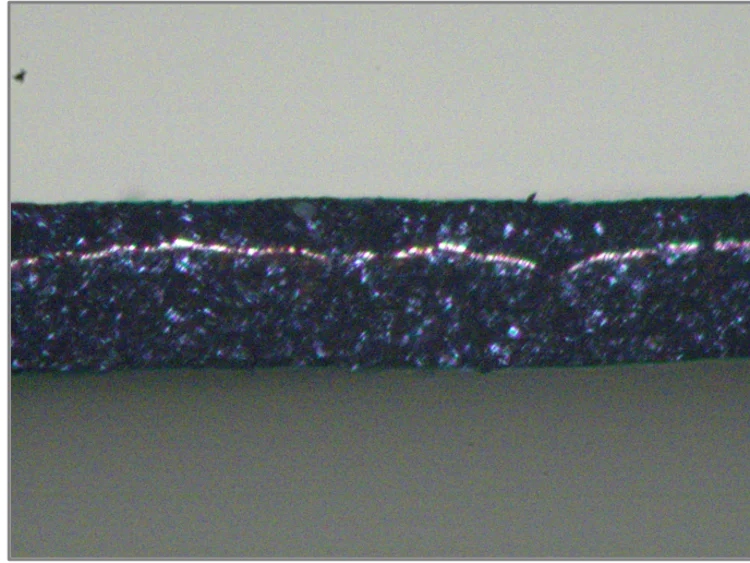
- Description:
- Periodic, wavy deviation of the cut edge from the nominal contour.
- Causes:
- Unstable web tension, asymmetric cutting forces, low composite stiffness
- Cell Impact:
- Local stress concentrations, secondary defects, reduced cell performance
Delamination
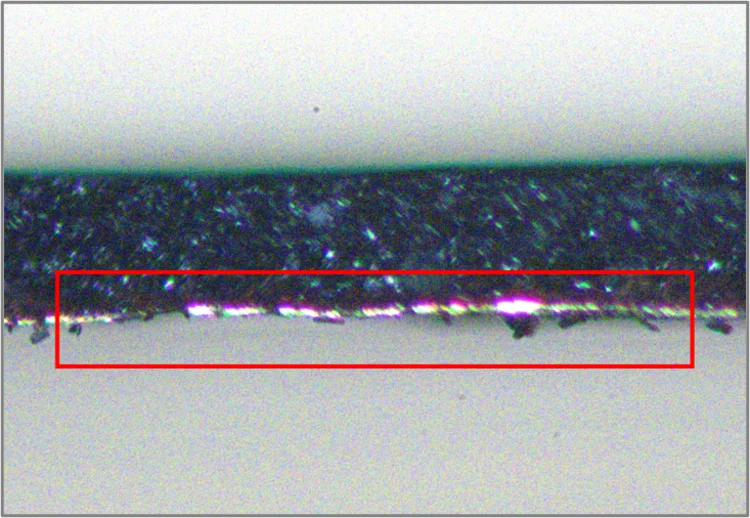
- Description:
- Detachment of the active material from the current collector, particularly in the edge and cut area
- Causes:
- High shear forces during cutting, pre‑existing cracks, weak adhesion, local over‑straining of the composite
- Cell Impact:
- Risk of separator damage, particle release, and internal short circuits
Cracks
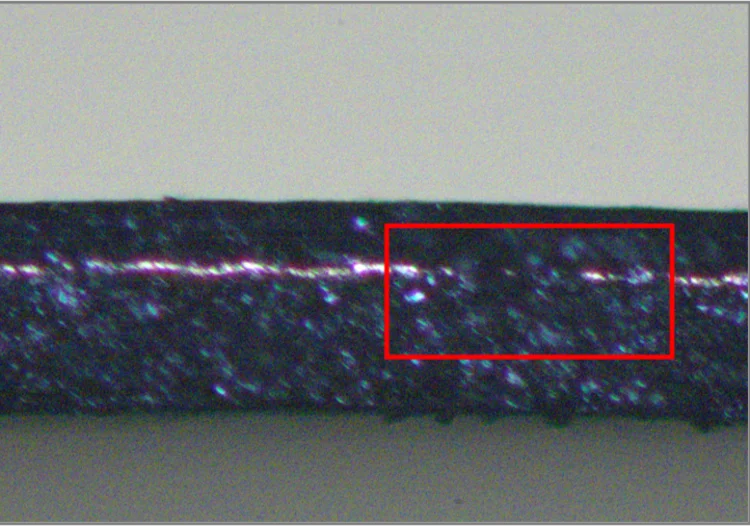
- Description:
- Local or continuous cracking in the active material or at the interface to the current collector
- Causes:
- Reduced electrical contact, local overheating, accelerated cell degradation
- Cell Impact:
- Increased risk of material failure, internal short circuits, and electrical, mechanical, and chemical instabilities
Fraying
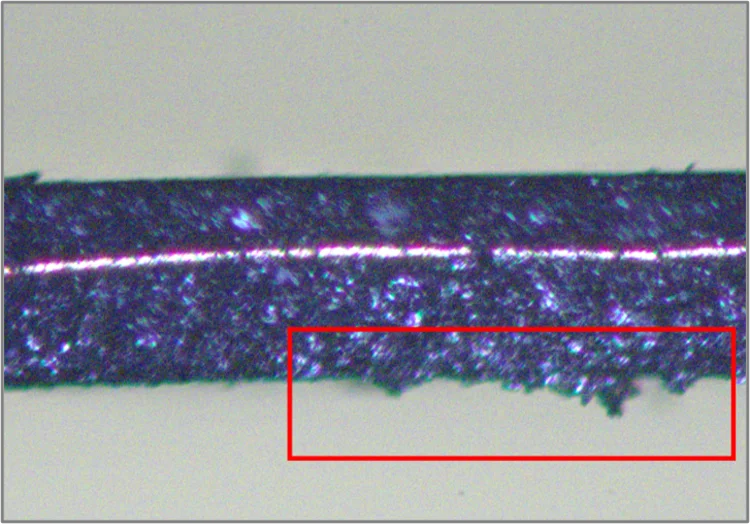
- Description:
- Fibrous, irregular cut edge caused by pull‑out of active material particles
- Causes:
- Dull cutting edge, low binder strength, inhomogeneous coating, material pull‑out due to high shear component
- Cell Impact:
- Increased risk of particle‑induced electrical, mechanical, and chemical instabilities in the cell
Closing the Gap: real-time quality through inline microscopy
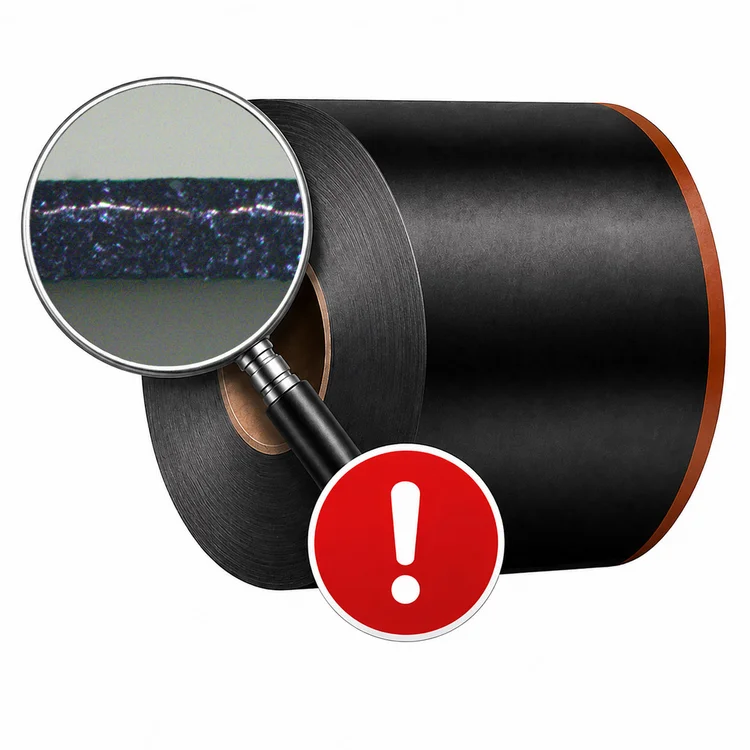
Status quo: Quality is recognized - but too late
- Offline quality assessment performed only after production
- Random sampling with external microscopes instead of full coverage
- No visibility of cut edge quality during production
- Burr defects detected too late, leading to scrap of kilometers of foil
- Residual uncertainty and risk, resulting in economic loss and quality issues
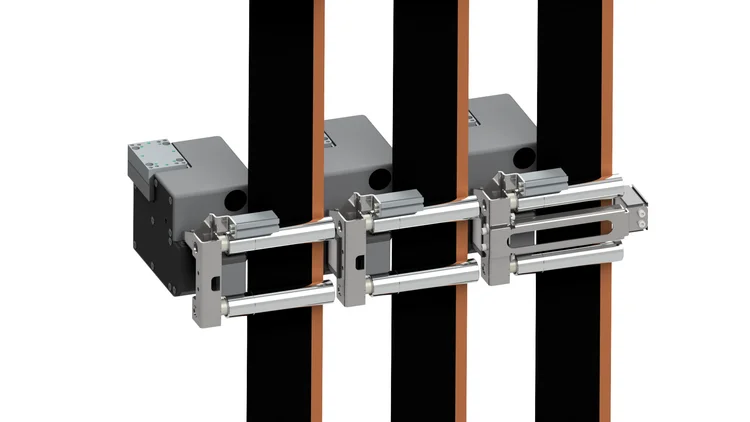
- True in-line inspection with unique orthogonal edge measurement
- Real-time feedback during slitting – no delayed offline analysis
- 100% monitoring, eliminating random sampling and uncertainty
- Immediate Burr detection, preventing scrap of kilometers of foil
- Robust, easily integrated system for industrial production environments